SIBERIAN BUSHING 12-01-2937 Set Polyurethane Bushings Rear 4640017041670 Swaybar 17.5
fits model: Tiburon.
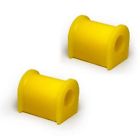
( Brand: Siberian Bushing ), ( Manufacturer Part Number: 12-01-2937 ), ( Part Type: Bushing ), ( Material: Polyurethane ), ( UPC: 4640017041670 ), ( Country/region Of Manufacture: Russian Federation ), ( Placement On Vehicle: Rear ), ( Lift Height: 2 Rear )
Review SIBERIAN BUSHING Set Polyurethane Bushings Rear Susp Swaybar Coupe Id 17.5mm fits TIBURON
Introducing the 4640017041670 set of polyurethane bushings for the rear swaybar of your 2000-2005 Chevrolet Tiburon (SIBERIAN bushing, part number 12-01-2937). This high-quality set is designed to replace the OEM bushings, providing improved performance and durability for your vehicle.
Each bushing in this set is made from polyurethane, a material known for its superior strength and resistance to wear and tear. Compared to the original rubber bushings, polyurethane bushings offer enhanced stiffness, which can lead to improved handling and better road feel. They also resist degradation from extreme temperatures, making them a great choice for both performance enthusiasts and daily drivers.
The 4640017041670 set includes all the bushings you need to replace both sides of the rear swaybar on your Tiburon. The bushings are precision-engineered to fit perfectly into your vehicle, ensuring a smooth and hassle-free installation process. And with their durable construction, you can expect these bushings to provide long-lasting performance, saving you time and money in the long run.
In summary, the 4640017041670 set of polyurethane bushings for the rear swaybar of your Chevrolet Tiburon is a great upgrade for any driver looking to improve the handling and durability of their vehicle. With its high-quality materials and precise fit, this set is sure to provide you with years of reliable performance.
Pros of buying a 4640017041670 set polyurethane bushings for the rear swaybar of a Tiburon (17.5 12-01-2937 siberian bushing):1. Improved handling: Polyurethane bushings are stiffer than rubber bushings, which can result in improved handling and reduced body roll.
2. Durability: Polyurethane bushings are more durable than rubber bushings and can withstand higher temperatures and loads.
3. Reduced noise: Polyurethane bushings can reduce the amount of noise and vibration transmitted through the suspension system.
4. Longevity: Polyurethane bushings do not degrade as quickly as rubber bushings, which can reduce the need for frequent replacements.
Cons of buying a 4640017041670 set polyurethane bushings for the rear swaybar of a Tiburon (17.5 12-01-2937 siberian bushing):1. Stiffer ride: The stiffer nature of polyurethane bushings can result in a stiffer ride, which may not be suitable for all drivers.
2. Potential for increased wear on other suspension components: The stiffer bushings can put more strain on other suspension components, which could potentially lead to increased wear and tear.
3. Cost: Polyurethane bushings are generally more expensive than rubber bushings.
Conclusion:The 4640017041670 set polyurethane bushings for the rear swaybar of a Tiburon (17.5 12-01-2937 siberian bushing) can offer improved handling, reduced noise, and increased durability. However, they can also result in a stiffer ride and potentially increased wear on other suspension components. The decision to purchase these bushings should be based on the driver's preference for ride quality and their willingness to invest in a more expensive suspension component.
Recommendation:If the driver values improved handling and reduced noise, and is willing to pay a premium for a more durable suspension component, the 4640017041670 set polyurethane bushings for the rear swaybar of a Tiburon (17.5 12-01-2937 siberian bushing) would be a good choice. However, if the driver prefers a softer ride and is looking for a more cost-effective solution, rubber bushings may be a better option. Ultimately, the decision should be based on the driver's specific needs and preferences.
Details:
High-quality Bushing of improved original design. Ideal for tuning and repair.
All sizes match the original ones. Siberian Bushing polyurethane Bushings set, sway bar rear suspension Hyundai Tiburon coupe,. Warranty: limited lifetime.
Produced since 2000 from elastics based on traditionally used polyurethane.
specifications swabasus:
- for models: Tiburon
- brand: Siberian Bushing
- mpn: 12-01-2937
- part type: Bushing
- material: Polyurethane
- upc: 4640017041670
- country/region of manufacture: Russian Federation
- placement on vehicle: Rear
- lift height: 2 Rear
Offer swabasus:
- Sold: 0
- best offer: false
- bids: 0
- Started: July 15, 2018, 9:04 am
- quantity: 1
Seller swabasus:
- zipcode: 08904
- city: Highland Park, New Jersey
Returns swabasus:
- time: 30 Days
- type: Money Back
- policy: returns accepted
- paid by: Buyer
General swabasus:
- condition: New
- motors > partsaccessories > cartruck parts > suspensionsteering > sway bars suspension steering
- in stock: Yes
Shipping swabasus:
- cost: $0.0
- type: Flat
- handling: 1 days
Ratings:
- Excellent! 06-09-18
- Happy with it! 06-24-18
- Excellent! 06-14-18
Payments swabasus:
- PayPal
Siberian Bushing 12-01-2937 Is Similar To:
- 1-01-1045 Siberian Bushing Set Of Pu Bushings Rr Swaybar 4630016165538 (78.4% similar) Warranty: limited lifetime. 08 rear suspension: Toyota Ariosto japan - JZS147 Siberian Bushing polyurethane Bushing, sway bar, suspension, v,s type package ideal for tuning and repair. All sizes match the original ones high-quality Bushing of improved design...(September 6th, 2018)
- 1-01-737 Siberian Bushing Set Of Pu Bush Fr Swaybar 4630016161875 (78.4% similar) Warranty: limited lifetime. Ideal for tuning and repair. All sizes match the original ones. Siberian Bushing polyurethane Bushing, sway bar, front suspension, Toyota corolla fielder NZE124, ZZE123, 124. Produced since 2000 from elastics based on traditionally used polyurethane. Wag, corolla run ...(July 15th, 2018)
- 1-01-783 Siberian Bushing Set Of Pu Bushings Fr Swaybar 4630016167310 (81.6% similar) 07 high-quality Bushing of improved original design. Toyota Caledonia japan warranty: limited lifetime d: front suspension: - AT211 Nadia ACN15 CT216 produced since 2000 from elastics based on traditionally used polyurethane. All sizes match the original ones. Ideal for tuning and repair. 09 front...(September 11th, 2018)
- 1-01-796 Siberian Bushing Set Of Pu Bushings Front Swaybar 4630016166672 (78.7% similar) Xi,gt,TV,gt,gateaux, I front suspension: Toyota corolla japan - CE97. 05: front suspension: Toyota corolla Levine japan - AE92. 05 front suspension: Toyota corolla japan - EE96 xi,gt,TV,gt,gateaux sprinter AE91,92, AE91. XI,GT,AV1,AV2,RVS sprinter truing AE9 MT. 04: front suspension: Toyota corolla ...(December 4th, 2018)
- 1-02-1545 Siberian Bushing Set Of Pu Bushings Fr Swaybar 4630016168072 (75.8% similar) Rear suspension: Toyota 4 runner USA - TRN280: TRN285 DJ cruiser GSJ10 GRN280MM quick delivery BU68, RZU68 all sizes match the original ones. 08, I high-quality Bushing of improved original design...(July 30th, 2018)
- 11-01-1571 Siberian Bushing Set Of Pu Bushings Fr Susp 4640017040017 (75.5% similar) Ideal for tuning and repair. Warranty: limited lifetime. Siberian Bushing polyurethane Bushing, sway bar, front suspension, end, Mercedes e2 E220, E280, E320. High-quality Bushing of improved original design. All sizes match the original ones. Produced since 2000 from elastics based on ...(August 14th, 2018)
- 11-01-1582 Siberian Bushing Set Of Pu Bushings Rr Swaybar 4640017040086 (83.1% similar) Siberian Bushing polyurethane Bushings set, sway bar, rear suspension, without braces Mercedes ML320, ML350, ML5 I m class europium. Produced since 2000 from elastics based on traditionally used polyurethane. All sizes match the original ones. Warranty: limited lifetime. 12: rear suspension: ...(August 14th, 2018)
- 15-01-1328 Siberian Bushing Set Of Pu Bushings Fr Swaybar 4630016163282 (77.9% similar) 12: front suspension: ford focus Europe - CB4. 12 -: front suspension: ford c max Europe CB3 Siberian Bushing polyurethane Bushing, sway bar, suspension focus cap, 2007 , cabriolet CA5 2006 CB4 2008 jug. 12: front suspension: ford focus Europe - cap all sizes match the original ones. 01 ford c...(August 25th, 2018)
- 2-01-1346 Siberian Bushing Set Of Pu Bushings Fr Swaybar 4640017045593 (81% similar) 03: front suspension: Nissan Mariano USA - CZ51MM elegant japan PE52 Europe Z51 quest warranty: limited lifetime. Nissan Mariano Europe all sizes match the original ones -: front suspension: quest USA E52 japan TNZ51. 08 Nissan Mariano USA: front suspension: japan - TZ51 elegant TE52. Produced since...(February 8th, 2019)
- 2-01-1353 Siberian Bushing Set Of Pu Bushings Rr Swaybar 4640017045456 (83.7% similar) 06 -: rear suspension: Infiniti QX70 Fox Europe S51 FX50 USA produced since 2000 from elastics based on traditionally used polyurethane. Siberian Bushing polyurethane Bushing, sway bar, rear suspension Infiniti FX35 S51 -: suspension: QX70 Fox USA FX50 ideal for tuning and repair. Warranty: ...(August 17th, 2018)
- 2-01-1704 Siberian Bushing Set Of Pu Bushings Fr Swaybar 4640017045708 (83.7% similar) Siberian Bushing polyurethane Bushing, sway bar, front suspension Infiniti QX56 JA60 -: suspension: QX80 Europe high-quality of improved original design. 07 -: front suspension: Nissan armada USA TA60 ,8MM. Warranty: limited lifetime. 12 -: front suspension: Infiniti QX56 USA JA60 QX80 Europe ...(August 2nd, 2018)