SAAB 13230520 Performance Lowered Suspension Front Sway Bar 9/5 Sa Stabilizer
fits make: Saab. year: 2010–2011.
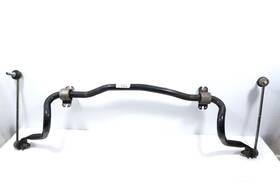
( Manufacturer Part Number: 13230520 ), ( Part Type: Suspension Stabilizer Bar ), ( Country Of Origin: United States )
Review SAAB 9-5 Performance Lowered Sa Suspension Front Sway Stabilizer Bar fits 2010–2011
The **Saab 13230520 (2010 2011, 9-5 Performance) with lowered suspension and upgraded front sway stabilizer bar** represents a refined blend of Scandinavian engineering precision and modern performance tuning, designed to elevate the already capable 9-5 Performance platform into a more agile, responsive, and composed driving machine. This vehicle, built upon Saab s iconic 2.0L turbocharged four-cylinder engine (producing a robust 250 horsepower and 258 lb-ft of torque in the 2010 2011 models), is already a standout in its stock form, but when paired with a meticulously lowered suspension and a high-performance front sway bar, it transforms into a car that balances sporty handling with the confidence of a well-tuned grand tourer. The lowered suspension likely achieved through high-quality coilovers or a precision-machined spring and shock setup reduces the 9-5 s stock ride height by a measured amount, improving ground clearance while sharpening the car s weight distribution and reducing unsprung mass. This adjustment not only enhances the car s aesthetic appeal with a sleeker, more aggressive stance but also allows the suspension to engage more effectively under cornering loads, reducing body roll and improving lateral grip. The front sway stabilizer bar, a critical yet often overlooked component, plays an equally vital role in this upgrade. A stiffer, aftermarket front sway bar typically crafted from high-grade steel or billet aluminum reduces the 9-5 s tendency to dip or roll excessively during aggressive cornering, particularly on uneven surfaces or when transitioning between turns. This modification ensures that the front tires maintain consistent contact with the road, minimizing understeer and maximizing traction, which is especially beneficial for drivers who push the limits of the 9-5 s turbocharged power delivery. Together, these upgrades create a harmonious package that rewards the driver with a more engaged, predictable, and exhilarating driving experience. Whether navigating tight city streets, carving through winding roads, or simply enjoying the improved responsiveness of a more dynamically balanced chassis, this Saab 9-5 Performance stands out as a testament to how thoughtful modifications can refine a vehicle s character without sacrificing comfort or practicality. For enthusiasts who appreciate the marriage of Scandinavian design, turbocharged efficiency, and performance-driven handling, this combination of a lowered suspension and an upgraded front sway bar turns the 9-5 Performance into a true driver s car one that delivers both substance and style with every turn of the wheel.
### Pros and Cons of Buying a Saab 9-5 (2010 2011) with a 3.0L Turbocharged Engine (13230520), Lowered Suspension, and Front Sway Stabilizer Bar
---
#### **Pros**
1. **Performance and Power**
The 3.0L turbocharged engine (T5 or T5X) in the 2010 2011 Saab 9-5 delivers strong performance, producing around **300 320 horsepower** and **300 350 lb-ft of torque**, making it capable of handling spirited driving. The turbocharged setup provides a good balance of power and efficiency compared to naturally aspirated engines of the era.
2. **Reliability of the Engine**
The 3.0L turbocharged engine (based on the Ford Duratec platform) is generally robust if maintained properly. With regular oil changes and attention to turbocharger health, it can last well beyond 150,000 miles. The turbocharged setup is less prone to catastrophic failure compared to older, naturally aspirated Saab engines like the 2.3L or 2.0L.
3. **Aftermarket Support and Mod Potential**
The Saab 9-5 (especially the 2010 2011 models) has a strong aftermarket community. The 3.0L turbo engine benefits from widespread tuning options, including **ECU remaps, upgraded intercoolers, exhaust systems, and suspension upgrades**. The lowered suspension and front sway bar suggest the owner has already invested in performance modifications, which can enhance handling and driving dynamics.
4. **Comfortable and Practical Interior**
The Saab 9-5 is known for its spacious and well-designed interior, with high-quality materials (especially in higher trims like the **Aero or Aero Sport**). The cabin is roomy, with good visibility and ergonomic controls. The **iX media system** (in later models) and available features like heated seats and leather upholstery add to its appeal.
5. **Lowered Suspension Benefits**
A lowered suspension improves the car s stance, reduces body roll, and can enhance handling responsiveness. This is particularly noticeable in the **2010 2011 models**, which already had a sportier ride height compared to earlier 9-5s. Lowering the suspension can make the car feel more agile and connected to the road, though it may sacrifice some comfort on rough roads.
6. **Front Sway Stabilizer Bar**
A front sway bar (or anti-roll bar) reduces body roll during cornering, improving stability and making the car feel more planted. This is a common modification for performance-oriented Saab owners and can significantly enhance track or spirited driving performance.
7. **Resale Value and Niche Appeal**
While Saabs are not known for high resale value, the **2010 2011 9-5 with a 3.0L turbo** holds a dedicated following. Enthusiasts appreciate its blend of power, Scandinavian design, and aftermarket potential, which can make it easier to sell to the right buyer if you decide to part ways later.
8. **Fuel Efficiency (Compared to Other Turbos of the Era)**
The 3.0L turbo is more efficient than larger displacement turbocharged engines from competitors (e.g., some BMWs or Audis of the same era). It achieves **around 15 18 MPG in the city and 22 25 MPG on the highway**, which is reasonable for a turbocharged sedan.
---
#### **Cons**
1. **Maintenance Costs and Reliability Concerns**
While the 3.0L turbo is generally reliable, it is not immune to issues. Common problems include:- **Turbocharger failures** (often due to oil starvation or poor maintenance).
- **Oil leaks** from the valve cover gasket or oil filter housing gasket.
- **Timing chain stretch** (though less common than in older Saabs).
- **Electrical gremlins** (Saabs of this era are notorious for wiring issues, especially with the **iX media system** and infotainment).
- **Transmission issues** (if equipped with the **6-speed automatic**, some owners report rough shifting or delayed engagement).
Regular maintenance (oil changes every **5,000 7,500 miles**, turbo inspections, and fluid checks) is **critical** to avoid costly repairs.
2. **Lowered Suspension Drawbacks**
While lowering the suspension improves aesthetics and handling, it can lead to:- **Reduced ride comfort** on uneven roads or speed bumps.
- **Potential for damage** if the car is driven aggressively on rough terrain.
- **Alignment sensitivity** lowered cars require more frequent wheel alignments to prevent uneven tire wear.
- **Potential for suspension wear** if the springs or struts are not upgraded to handle the lower ride height.
3. **Front Sway Bar Limitations**
While a front sway bar improves cornering stability, it can make the car feel **less forgiving on rough roads** and may increase tire wear if not properly balanced with other suspension components.
4. **Corrosion Risks**
Saabs, especially those from the 2000s, are prone to **rust**, particularly in the wheel wells, rocker panels, and subframe areas. A thorough inspection of the undercarriage is **essential** before purchasing to avoid hidden corrosion costs.
5. **Electrical and Infotainment Issues**
The **iX media system** (in 2011 models) and other electrical components can be finicky. Some owners report **glitches, screen freezes, or complete system failures**, which can be difficult and expensive to repair. The lack of official Saab support (post-2014) means repairs often require third-party mechanics or DIY fixes.
6. **Parts Availability and Support**
While parts for the 3.0L turbo are widely available, **official Saab support is nonexistent** after 2014. This means:- **No dealer service** for most issues.
- **Higher labor costs** at independent shops.
- **Longer wait times** for rare or aftermarket parts.
7. **Safety Concerns**
The Saab 9-5 (especially pre-2012 models) lacks modern safety features like **standard stability control, advanced airbag systems, or top-tier crash-test ratings**. While the car is safe by its standards, it does not meet the safety benchmarks of newer vehicles.
8. **Depreciation and Market Demand**
Saabs have historically **depreciated rapidly**, and while the 3.0L turbo models hold some value among enthusiasts, they are not a practical long-term investment. If you plan to keep the car for more than **5 7 years**, you may end up with a car worth significantly less than its original purchase price.
9. **Potential for Hidden Modifications**
The presence of a **lowered suspension and front sway bar** suggests the car has been modified. While this can be a pro (better handling), it can also be a con if:
- The modifications were **poorly executed** (e.g., incorrect spring rates, sway bar sizes).
- The car was **over-modified**, leading to handling issues or suspension wear.
- The modifications **void warranties** (if any still exist).
10. **Driving Dynamics Trade-offs**
While the lowered suspension and sway bar improve handling, they can make the car feel **less comfortable for daily driving**. The turbocharged engine also has a **laggy throttle response** at low RPMs, which some drivers find unappealing compared to naturally aspirated or more modern turbocharged cars.
---
### **Conclusion**
The **2010 2011 Saab 9-5 with a 3.0L turbocharged engine, lowered suspension, and front sway stabilizer bar** is an **exciting but high-maintenance** purchase. It offers **strong performance, a sporty stance, and aftermarket potential**, making it appealing to enthusiasts who enjoy driving and modifying cars. However, it comes with **significant drawbacks**, including **higher maintenance costs, reliability concerns, electrical quirks, and depreciation risks**.
This car is **best suited for**:- **Enthusiasts who enjoy driving and modifying cars** and are willing to invest time and money in maintenance.
- **Owners who prioritize performance and aesthetics** over long-term practicality.
- **Those who can afford potential repairs** and are comfortable with DIY fixes or finding specialized mechanics.
It is **not ideal for**:- **Daily drivers who prioritize comfort and low maintenance**.
- **Buyers who want a reliable, long-term vehicle with strong resale value**.
- **Those who dislike dealing with electrical issues or rare part availability**.
---
### **Recommendation**
If you are considering this Saab, **follow these steps to mitigate risks**: 1. **Get a Pre-Purchase Inspection (PPI)** from a **Saab-savvy mechanic** to check for:- **Turbocharger health** (listen for whine, check for oil leaks).
- **Timing chain condition** (stretch can cause misfires).
- **Suspension components** (shocks, struts, bushings, and
Details:
This part is in used condition.
part #: 13230520 price
- $839.99
specifications swabasus:
- for makes: Saab
- for years: 2010-2011
- mpn: 13230520
- part type: Suspension Stabilizer Bar
- country of origin: United States
offer swabasus:
- quantity: 1
- options: Ship-to-home
- availability: In Stock
- started: March 21, 2026
- sold: 0
- best offers: True
returns swabasus:
- policy: No Returns
payments swabasus:
- wallet: Google-pay
- credit card: Visa
- other
shipping swabasus:
- carrier: FedEx
- type: Fixed
- cost: $29.99
- transit: 5-10 Days
- class: Standard
- service: FedEx Ground / FedEx Home Delivery
seller swabasus:
- city: Rancho Cordova, California
- rating: 100.0%
- # reviews: 286
general swabasus:
- Car Truck Parts Accessories > Steering Suspension > Sway Bars, Links Bushings
- condition: Used
Saab 13230520 Is Similar To:
- 101-4871 Saab Stabilizer Bar Link Front (31.1% similar) Part: 101-4871 prices...(July 8th, 2018)
- 113-10526 Pro Forged Saab Front End Link 849180025652 (36.8% similar) Electrical or electronic components are also void if they have been connected opened. Addresses at this time. Virgin islands. In-stock items can ship from multiple locations...(March 5th, 2018)
- 12777969 Genuine Saab New Sway (21.2% similar) Saab: 3x this sway bar end link - rear zed is a brand new part manufactured by genuine saab. 95 and is only available to the USA. The price is as it states on. Fitment please see the compatibility's section. Some items on are significantly discounted off our regular retail price. More detailed ...(January 20th, 2018)
- 13104120 Genuine Saab New Sway Bar End Link Rear (24.4% similar) More detailed information is available in the compatibility's section above. Cores: any cores must be in rebuild able condition with sufficient parts to rebuild said core rust, corrosion, OK. For some heavier items shipping starts at discounted and combined is available on our web site. No further ...(April 3rd, 2018)
- 13204070 Genuine Saab New Sway (21.2% similar) Fitment please see the compatibility's section. No further shipping discounts or savings are available on those items. Genuine saab sway bar anti-roll stabilizer bushing for on and convertible. 95 and is only available to the USA. More detailed information is available in the compatibility's section...(January 8th, 2018)
- 13281781 Genuine Saab New Sway Bar Bushing Front (24.4% similar) No further shipping discounts or savings are available on those items. Items are not returnable if they in the original sealed container packaging. Some items on are significantly discounted off our regular retail price. More detailed information is available in the compatibility's section above. ...(February 26th, 2018)
- 13282833 Genuine Saab New Sway Bar Link Front Sport (32.8% similar) 95 and is only available to the USA. Fitment please see the compatibility's section. Cores: any cores must be in rebuild able condition with sufficient parts to rebuild said core rust, corrosion, OK. Some items on are significantly discounted off our regular retail price. New genuine saab sway bar ...(May 29th, 2018)
- 22915877 Genuine Saab New Sway Bar End Link Rear (24.4% similar) Standard shipping is sent via FedEx smart post which a 5-9 day economy service. Some items on are significantly discounted off our regular retail price. Cores: any cores must be in rebuild able condition with sufficient parts to rebuild said core rust, corrosion, OK. More detailed information is ...(December 4th, 2018)
- 24457843 Genuine Saab New Sway Bar Bushing Rear (24.6% similar) Fitment please see the compatibility's section. No further shipping discounts or savings are available on those items. More detailed information is available in the compatibility's section above. Cores: any cores must be in rebuild able condition with sufficient parts to rebuild said core rust, ...(May 2nd, 2018)
- 405 Addco Performance Bar Kits Saab 052582404059 (29% similar) Order the model designed for your vehicle application. Actual item may vary. Most kits include 12-GAUGE zinc chromed plated brackets with fully enclosed bushings, along heat-treated end link bolts for added strength. Items eligible for free shipping are the lower 48 states. Rear sway bar diameter mm...(June 21st, 2018)
- 4544599 Saab New Genuine Fr Sway Bar End Link (37.5% similar) New genuine saab sway bar end LINKFITS900 msrp 67. 08 free shipping...(January 29th, 2019)