HONDA 524-58458 Front Stabilizer Bar A44RP
fits model: Accord. make: Honda. year: 1990.
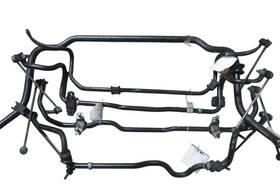
( Part Type: Stabilizer Bar ), ( Ipn: 524-58458 ), ( Fitment Type: Direct Replacement ), ( Modified Item: No ), ( Manufacturer Warranty: Unspecified Length ), ( Placement On Vehicle: Front )
Review HONDA Front Stabilizer Bar Oem fits ACCORD 1990
The **Honda 524-58458 1990 Accord Front Stabilizer Bar (A44RP)** is a precision-engineered suspension component designed to enhance the handling and stability of the iconic 1990 Honda Accord. This stabilizer bar, part of the original equipment (OEM) assembly, plays a critical role in reducing body roll during cornering, ensuring a smoother and more controlled driving experience. Crafted from high-grade steel, the bar is built to withstand the rigors of daily driving while maintaining durability and reliability. Its robust construction features a robust mounting bracket system, allowing for secure attachment to the vehicle s subframe, which helps distribute forces evenly across the suspension. The stabilizer bar operates by connecting the left and right wheels, effectively counteracting the natural tendency of a vehicle to lean when navigating turns. This not only improves the car s responsiveness but also contributes to a more composed ride, particularly on winding roads or during aggressive maneuvers. Whether you're restoring your 1990 Accord to its original specifications or upgrading its suspension for better performance, this stabilizer bar is a key component that ensures the vehicle s handling remains sharp and predictable. Its compatibility with the A44RP suspension setup makes it an essential part of maintaining the car s classic driving dynamics, offering a perfect blend of functionality and authenticity for enthusiasts seeking both performance and reliability.
### **Pros and Cons of Buying a 1990 Honda Accord (A44RP) with a Front Stabilizer Bar (Part #524-58458)**
#### **Pros**
1. **Common and Affordable Replacement Part** The stabilizer bar (sway bar) is a standard component for the 1990 Honda Accord (A44RP), meaning it is widely available at auto parts stores, online retailers, and salvage yards. Prices are generally reasonable, often ranging between $30 and $80 depending on brand and condition.
2. **Easy to Install** The sway bar is a relatively straightforward DIY repair, requiring basic tools (socket set, jack, jack stands, and possibly a torque wrench). Many mechanics and owners report that installation takes less than an hour if done carefully.
3. **Improves Handling Stability** A worn or broken stabilizer bar can cause excessive body roll, poor cornering, and an unstable ride. Replacing it restores proper weight distribution and reduces sway, making the car feel more planted and predictable, especially during turns or uneven road conditions.
4. **Prevents Further Damage** If the stabilizer bar is cracked, bent, or rusted, it can lead to accelerated wear on bushings, control arms, or suspension components. Replacing it early avoids more costly repairs down the line.
5. **Compatibility with Other Modifications** If you plan to upgrade other suspension parts (e.g., bushings, shocks, or sway bar links), this is a logical first step. A new stabilizer bar can complement other performance or comfort-oriented modifications.
6. **Long-Lasting Material** Most aftermarket stabilizer bars are made from high-quality steel or reinforced alloys, designed to last as long as the original (or longer if properly maintained). OEM parts are also durable, though aftermarket options may offer slight weight savings or improved performance.
7. **Minimal Maintenance Required** Once installed, the stabilizer bar requires no lubrication or adjustment. The only potential maintenance is checking for rust or damage during routine inspections.
---
#### **Cons**
1. **Potential Rust Issues** Older Honda Accords, especially those driven in salted or humid climates, may have rusted stabilizer bars. Inspect the part closely for corrosion before purchasing, as a rusted bar can weaken and fail prematurely.
2. **Bushing Wear on the Bar Itself** While the stabilizer bar itself may be intact, the bushings (rubber mounts) that attach it to the car can wear out. If the bushings are shot, replacing just the bar won t fully resolve handling issues. You may need to replace the bushings as well (or the entire bar assembly, which includes bushings).
3. **Misalignment Risk** If the bar is not installed correctly (e.g., not properly torqued or misaligned), it can cause uneven tire wear or handling problems. This requires careful attention to torque specifications and alignment afterward.
4. **Aftermarket Quality Variability** While many aftermarket stabilizer bars are reliable, some cheaper brands may have thin material or poor welding, leading to premature failure. Researching the brand and reading reviews can help mitigate this risk.
5. **Limited Performance Gain for Stock Cars** Unless you re driving aggressively or modifying other suspension components, the improvement in handling may be subtle. For a stock 1990 Accord, the stabilizer bar s role is more about preventing excessive roll than enhancing sporty dynamics.
6. **Possible Compatibility with Other Parts** If the car has been previously modified (e.g., lowered, widened, or with aftermarket shocks), a stock stabilizer bar may not be ideal. In such cases, an upgraded or adjustable bar might be better.
7. **Time-Consuming if DIY** While the installation is manageable for experienced DIYers, first-timers may struggle with torque values, alignment, or tool access. If unsure, hiring a mechanic ( $80 $150 labor) is a safer option.
---
### **Conclusion**
Replacing the front stabilizer bar on a 1990 Honda Accord (A44RP) is a **practical and cost-effective repair** that improves handling stability and prevents further suspension wear. The part is widely available, easy to install, and offers noticeable benefits in ride quality and safety. However, it s crucial to **inspect the bar for rust, check the bushings, and ensure proper installation** to avoid recurring issues.
If the car has other suspension wear (e.g., worn bushings, leaking shocks, or misaligned wheels), addressing those simultaneously would yield better long-term results. For most owners, this is a **low-risk, high-reward repair** that extends the life of the suspension system.
---
### **Recommendation**
- **Buy the part** from a reputable supplier (e.g., RockAuto, Dorman, or an auto salvage yard with a good return policy).
- **Inspect the bar** for cracks, rust, or deformation before purchasing.
- **Check the bushings** if they re worn, replace them at the same time or consider buying a **bar assembly** (bar bushings) for convenience.
- **Install carefully**, following torque specs (typically **60 70 ft-lbs** for the bolts, depending on the source).
- **Get an alignment** after installation to ensure even tire wear.
- **Consider professional help** if unsure about the installation process.
**Final Verdict:** **Worth the repair** for any Accord owner experiencing excessive body roll, poor cornering, or suspension noise. Prioritize quality parts and proper installation to maximize the benefit.
Details:
This 1990 Honda ACCORD Stabilizer Bar Front is in overall good condition. Most electronic parts are not plug and play. Please also use the pictures to ensure a proper fit. Shipping is via USPS or UPS.
Compatible with.
part #: 524-58458 prices
- $112.25-$138.00
specifications swabasus:
- for models: Accord
- for makes: Honda
- for years: 1990
- part type: Stabilizer Bar
- ipn: 524-58458
- fitment type: Direct Replacement
- modified item: No
- manufacturer warranty: Unspecified Length
- placement on vehicle: Front
payments swabasus:
- other
- wallet: Google-pay
- credit card: Visa
seller swabasus:
- rating: 99.4%
- city: Las Vegas, Nevada
- # reviews: 88274
general swabasus:
- Car Truck Parts Accessories > Steering Suspension > Sway Bars, Links Bushings
- condition: Used
offer swabasus:
- options: Ship-to-home
- quantity: 1
- availability: In Stock
- sold: 0
- started: May 19, 2026
returns swabasus:
- time: 30 Days
- paid by: Seller
- policy: Returns Accepted
shipping swabasus:
- transit: 3-8 Days
- class: Standard, Expedited
- cost: $0.00
- type: Fixed
- service: Standard, Expedited
Honda A44RP Is Similar To:
- 101-6392 Suspension Stabilizer Bar Link Fits Honda Ridgeline (32.2% similar) Beck anally supplied your vehicles manufacturer with the suspension stabilizer bar link. Part numbers, 15728, HN-L637, HO52325. Brands: car quest red chassis Canada, Deena, federated Set chassis, Karyn sit, Murdoch LP, Moog, oe brand, imparts automotive, parts master Pb pro steer quick steer, rare ...(February 24th, 2019)
- 101-6500 Suspension Stabilizer Bar Bushing Kit Fits Honda Accord (39.3% similar) Trow automotive part numbers: 16064, FA7458, HN-K206, HO50. Brands: car quest red chassis Canada, Deena, Murdoch LP, Moog, oe brand, Pb pro steer chassis, rare parts inc...(July 7th, 2018)
- 101-7104 Suspension Stabilizer Bar Bushing Kit Rear Fits Honda Accord (34.6% similar) ...(April 14th, 2018)
- 101-8006 Suspension Stabilizer Bar Link For Honda Fit 049797968223 (32.3% similar) 5NUMBER of pieces: 1UPC: 3 beck anally is a leading specialty provider premium parts for cars, light trucks, and Suva. Electronic items are not returnable...(April 6th, 2018)
- 101-8007 Suspension Stabilizer Bar Link For Honda Fit 049797968230 (32.3% similar) This e-mail is constantly monitored so you can be sure your questions will answered promptly and courteously. Electronic items are not returnable. Shipping costs are based on the method that you choose. 5NUMBER of pieces: 1UPC: beck anally is a leading specialty provider premium parts for cars, ...(April 6th, 2018)
- 113-10098 Pro Forged Honda Accord-acura (30.9% similar) Our product offering includes every conceivable trailer, tire, towing device, truck accessory, suspension, exhaust, lighting, and performance part. Priced each. Pro forged honda accord aura cl driver side rear end link P/N thumbnails to side steel rubber zinc oxide black 1998 -2007SOLD each ...(December 18th, 2017)
- 113-10276 Proforged Suspension Stabilizer Bar Link Kit Fits Honda 849180020893 (35.3% similar) Listing data is catalog provider. Every fit surface is CBC machined for precision and finish. Tie rod units are sealed with specially designed Cr-rubber boots for ultimate durability. What is a sway bar end link. Link also known as stabilizer part of your vehicles suspension system - it connects or ...(March 26th, 2018)
- 16.5130r Energy Suspension Stabilizer Bar Bushing Kit Fits Honda 703639719557 (28.1% similar) 5130R item condition: new: suspension stabilizer bar bushing kit manufacturer brand quantity needed: 1 fitment notes: Si red DOA 26MM pref polyurethane position: front specifics: UPC: 57AAIA part type kit country of origin primary: us emission code 1HARMONIZED tariff Hts life cycle status code: ...(March 26th, 2018)
- 16.5146g Energy Suspension For Honda Civic Si Front Sway 703639112617 (26.8% similar) E edgily rd. Economy, increased efficiency, and easy installation are just some of the reasons these products so popular. Rubber bushings. Made of hyper-flex polyurethane that lasts much longer than...(April 21st, 2018)
- 16.5146r Energy Suspension For Honda Civic Si Front Sway 703639112624 (28.3% similar) Rubber bushings. Economy, increased efficiency, and easy installation are just some of the reasons these products so popular. Levitt own, pa energy suspension honda civic Si 28MM front sway bar bushings - red performance polyurethane and end links offer the greatest improvement in among all products...(April 21st, 2018)
- 16405 Rare Parts Suspension Stabilizer Bar Bushing Front Fits Honda Civic (30.5% similar) Postal service. State id, Canadian province us. Postal service or FedEx. Place the return shipping label on outside of box and ship it...(November 6th, 2018)