MITSUBISHI MR297471 Front Stabilizer Bar Sway 3.0L
fits model: Eclipse. make: Mitsubishi. year: 2000–2005.
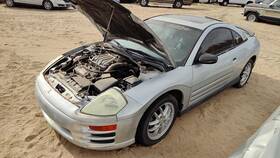
( Manufacturer Part Number: MR297471 ), ( Part Type: Stabilizer Bar ), ( Id: Bca0aebe-8b2a-45d2-acb5-ebdc6431438c ), ( Interchange: 524-59030 ), ( Year: 2004 )
Review MITSUBISHI Front Stabilizer Bar Oem Sway 3.0l fits ECLIPSE 2000–2005
The **Mitsubishi MR297471 2000-2005 Eclipse Front Stabilizer Bar Sway Bar** is a precision-engineered suspension component designed to enhance the handling, stability, and overall driving dynamics of your 3.0L Mitsubishi Eclipse from the 2000 to 2005 model years. This high-quality sway bar is a direct replacement for the original equipment part, ensuring a perfect fit and seamless integration into your vehicle s front suspension system. Crafted from durable, high-grade steel, it is built to withstand the rigors of daily driving, aggressive cornering, and varying road conditions, providing consistent performance and longevity. The stabilizer bar plays a critical role in reducing body roll during sharp turns, improving tire contact with the road, and delivering a more responsive and controlled driving experience. Whether you're navigating tight city streets, cruising on the highway, or tackling winding backroads, this sway bar helps maintain optimal stability, reducing unwanted lean and enhancing the Eclipse s natural agility. Its robust construction and reliable design make it an essential component for maintaining the integrity of your suspension setup, ensuring that your vehicle remains both comfortable and capable. Ideal for both original equipment replacement and performance-oriented upgrades, this sway bar is a straightforward yet impactful solution for drivers seeking to refine their Eclipse s handling characteristics.
### Pros and Cons of Buying a 2000-2005 Mitsubishi Eclipse (3.0L) Front Stabilizer Bar (Part # MR297471)
#### **Pros:**1. **Direct Replacement Fit** The part number MR297471 is a genuine Mitsubishi factory replacement for the front stabilizer bar on the 2000-2005 Eclipse with the 3.0L engine. This ensures an exact fit without modifications, reducing the risk of installation issues.
2. **Improved Handling Stability** A worn or broken stabilizer bar can cause excessive body roll, poor cornering, and an unstable ride. Replacing it restores proper weight distribution and enhances vehicle stability, especially during sharp turns or uneven road conditions.
3. **Prevents Further Damage** A failing stabilizer bar can stress suspension components like bushings, control arms, and even the subframe. Replacing it early prevents secondary damage, saving money on more extensive repairs later.
4. **Affordable Replacement Cost** Compared to full suspension overhauls, a stabilizer bar replacement is relatively inexpensive. The part itself is reasonably priced, and labor costs are minimal since it s a straightforward bolt-on component.
5. **Easy Installation** The stabilizer bar is accessible and typically requires only basic tools (socket wrench, torque wrench, and possibly a jack and jack stands). Many DIYers can replace it themselves in under an hour.
6. **Extended Lifespan of Suspension** By maintaining proper alignment and reducing unnecessary stress on other suspension parts, the stabilizer bar replacement contributes to the longevity of the entire suspension system.
7. **OEM Quality** Mitsubishi s original equipment parts are designed to meet the vehicle s specifications, ensuring durability and performance comparable to the original component.
---
#### **Cons:**1. **Potential Rust or Corrosion** Older Mitsubishi vehicles, especially those from the early 2000s, may have rusted suspension components. The stabilizer bar or its mounting points could be corroded, requiring additional cleaning or replacement of bushings or brackets.
2. **Worn Bushings** Over time, the rubber bushings that connect the stabilizer bar to the vehicle can degrade, causing noise or reduced effectiveness. If the bushings are worn, they may need replacement alongside the bar, adding to the cost.
3. **Limited Aftermarket Availability** While the OEM part is reliable, aftermarket alternatives may not always be as durable or precisely fitted. Sticking with the genuine Mitsubishi part avoids compatibility issues but may be harder to find in some regions.
4. **Labor Time for Rusty Bolts** If the bolts holding the stabilizer bar are seized due to rust or corrosion, removing them can be time-consuming and may require penetrating oil or bolt cutters. This could increase labor time if doing the work yourself.
5. **No Major Performance Gain** Unlike upgrading to a stiffer or adjustable stabilizer bar (which is not an OEM part), this replacement restores factory specifications rather than improving handling beyond the original design.
6. **Possible Misalignment After Replacement** If the vehicle has been driven with a broken stabilizer bar for an extended period, the suspension may have settled into a misaligned state. A wheel alignment may be needed after replacement to ensure optimal performance.
7. **Age-Related Wear** The 2000-2005 Eclipse models are over two decades old, and other suspension components (e.g., shocks, struts, or control arms) may also be worn. Replacing just the stabilizer bar may not fully address handling issues if other parts are failing.
---
### **Conclusion:**Replacing the front stabilizer bar on a 2000-2005 Mitsubishi Eclipse with the 3.0L engine using the genuine Mitsubishi part (MR297471) is a **practical and cost-effective solution** for improving handling stability and preventing further suspension damage. The benefits such as restored alignment, reduced body roll, and protection of other suspension components outweigh the minor drawbacks, which are largely manageable (e.g., rust, worn bushings, or alignment needs).
The main risks (rust, labor time, or secondary suspension issues) can be mitigated by:- Inspecting the mounting points and bushings before purchase.
- Using penetrating oil if bolts are seized.
- Checking for other suspension wear (e.g., shocks, bushings) during the replacement.
- Performing a wheel alignment afterward if needed.
For most owners, this is a **worthwhile repair** that extends the life of the vehicle and enhances its drivability without requiring significant investment.
---
### **Recommendation:**- **Buy the part (MR297471)** if you re experiencing handling issues like excessive body roll, uneven tire wear, or a clunking noise from the front suspension. Prioritize purchasing from a reputable dealer or online retailer (e.g., RockAuto, Mitsubishi parts specialists) to ensure authenticity.
- **Inspect the bushings and mounting hardware** before installation. Replace any corroded bolts or worn bushings to avoid future problems.
- **Consider a full suspension inspection** if the vehicle has significant mileage or signs of other suspension wear. While not always necessary, addressing multiple issues at once can save money long-term.
- **DIY if comfortable** the job is straightforward for those with basic mechanical skills. If unsure, consult a mechanic for guidance.
- **Follow torque specifications** closely during installation to avoid overtightening or loosening the bar, which could affect handling.
**Final Verdict:** This is a **smart, low-risk upgrade** for the Eclipse s suspension, especially if handling has deteriorated. The part is reliable, easy to install, and cost-effective, making it a recommended fix for the described symptoms.
Details:
MITSUBISHI GALANT 00-03 Front, 3.0L 6 cylinder, GTZ.
part #: mr297471 prices
- $140.70-$169.16
specifications swabasus:
- for models: Eclipse
- for makes: Mitsubishi
- for years: 2000-2005
- mpn: Mr297471
- part type: Stabilizer Bar
- id: Bca0aebe-8b2a-45d2-acb5-ebdc6431438c
- interchange: 524-59030
- year: 2004
offer swabasus:
- best offers: True
- sold: 0
- quantity: 1
- availability: In Stock
- options: Ship-to-home
- started: February 26, 2026
returns swabasus:
- paid by: Seller
- policy: Returns Accepted
- time: 30 Days
seller swabasus:
- city: Brush, Colorado
- rating: 99.3%
- # reviews: 14577
shipping swabasus:
- cost: $0.00
- type: Fixed
- class: Standard
- transit: 2-5 Days
- service: Standard
general swabasus:
- condition: Used
- Car Truck Parts Accessories > Steering Suspension > Sway Bars, Links Bushings
payments swabasus:
- credit card: Mastercard
- wallet: Google-pay
- other
Mitsubishi MR297471 Is Similar To:
- 06506746aa Mitsubishi Genuine Raider Stabilizer (43.7% similar) Electrical parts are not returnable. Our Mopar parts team is here to help. Parts must be resalable and in the original packaging. Shipping carrier substitutions may be made at our determination in an attempt to reduce cost the customer...(November 2nd, 2017)
- 06506961aa Mitsubishi Genuine Raider Stabilizer (43.7% similar) Our Mopar parts team is here to help. Parts must be resalable and in the original packaging. Shipping carrier substitutions may be made at our determination in an attempt to reduce cost the customer. Electrical parts are not returnable...(November 2nd, 2017)
- 4056a026 Mitsubishi Oem Eclipse Stabilizer Sway (58.8% similar) And we discount them all. Electrical items and supplement restraint system components. Our expert staff is here to help you find the right parts first time, every time for car, truck or SUV. Some parts may have multiple options depending on the vehicle application. Sr's modules, airbags, and crash ...(October 26th, 2018)
- 4056a037 Mitsubishi Oem Lancer Stabilizer Sway (50.8% similar) Superseded part numbers this item may have been from a different number manufacture...(July 19th, 2018)
- 4056a230 Mitsubishi Genuine Outlander Stabilizer (43.3% similar) Shipping carrier substitutions may be made at our determination in an attempt to reduce cost the customer. Parts must be resalable and in the original packaging. Electrical parts are not returnable...(November 28th, 2017)
- 6400c446 Mitsubishi Oem Outlander Front (32.4% similar) Sr's modules, airbags, and crash sensors are non-returnable. Our expert staff is here to help you find the right parts first time, every time for car, truck or SUV. Electrical items and supplement restraint system components. Some parts may have multiple options depending on the vehicle application...(October 26th, 2018)
- Bmr86xz Whiteline Sway Bar Rear Adjustable For Mitsubishi Lancer 9319924377046 (22.7% similar) Cornering loads are spread more evenly across the tyres delivering grip and frankly, that is what it all about. This increases the amount of force required to make body roll fitting bigger whittling sway bars is still best dollar for handling improvement you can. This permits the roll stiffness to ...(October 11th, 2018)
- 22440 Hotchkis Performance Sway Bars Black Steel Front 1 1 4 Rear Dias Mitsubishi Lancer (17.5% similar) Rear sway bar diameter in in. 00MM front sway bar type hollow mounting hardware included yes notes front sway bar is 2 way adjustable and the rear sway bar is 3 way adjustable. Position front and rear quantity sold as a kit. Buyer pays return shipping...(July 31st, 2016)
- K7430 Moog Fits Mitsubishi Eclipse Galant 080066324524 (36.5% similar) This part fits vehicles made in the following years 1999 , 20 2001 , 2002 , 2003 , 2004 , 2005 . Feature 2: Moog r engineered steel composition results in a stronger component. For better lubrication position: front left item specifics: UPC: 24APPLICATION summary: Chrysler:Sebring dodge:...(April 8th, 2018)
- Kbr22-24 Whiteline Sway Bar Mount Kit Rear For Mitsubishi Evo (19.5% similar) Whittling KBR22-24 sway bar mount kit rear 24MM for mitsubishi Eco 8/9 heavy duty mounting saddle kits are designed to replace the original equipment mounts with a stronger more rigid version. Extra heavy duty rear sway bar mounts improve response should be used for large diameter or adjustable bars...(May 3rd, 2018)
- Mb338595 Mitsubishi Oem 94-00 Montero (29.4% similar) Est, Mon to Fri...(November 2nd, 2017)